
A single failed expatriate assignment can cost your company anywhere from $250,000 to $1 million, and that figure does not account for the reputational damage or compliance penalties that often follow. Many HR teams still treat international relocation as a logistics puzzle rather than a strategic program, and that mindset is expensive. The reality is that unstructured moves expose companies to immigration violations, tax mismatches, and talent loss simultaneously. This guide breaks down how professional relocation services protect your organization, what drives true relocation costs, and how technology is reshaping the field so you can make smarter decisions for your mobile workforce.
Table of Contents
-
Cost drivers, risks, and the true price of failed relocations
-
How relocation services ensure compliance and policy alignment
-
Innovations transforming relocation: technology, AI, and future trends
-
How Nestlers Group supports successful, compliant relocations
Key Takeaways
| Point | Details |
|---|---|
| Structured relocation is strategic | Purpose-built relocation services reduce financial, compliance, and reputational risk for global organizations. |
| Cost failures are avoidable | Most costly assignment failures stem from preventable gaps in planning, compliance, or employee support. |
| Compliance drives success | Expert relocation providers keep HR and companies compliant with changing global policies and regulations. |
| Technology boosts outcomes | Adopting AI and technology in relocation saves money and increases expat success rates. |
Why relocation services matter for global mobility
With the financial stakes established, let’s explore why structured relocation solutions have become indispensable for multinational operations.
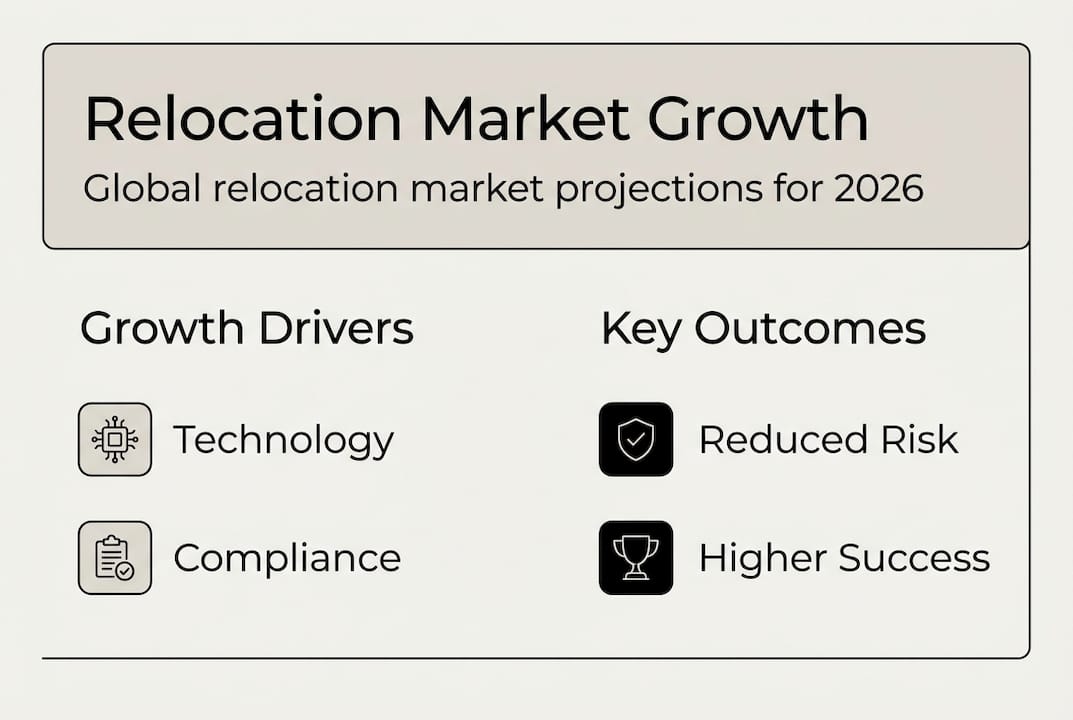
The global relocation market tells a clear story. It is projected to grow from $20.22B in 2025 to $32.47 billion in the coming years, reflecting how seriously organizations now treat workforce mobility as a core business function. Companies are not spending at this scale out of generosity. They are investing because the alternative, managing relocations on an ad-hoc basis, consistently produces worse outcomes across every measurable dimension.
For HR managers and compliance officers, the international relocation process involves far more than booking flights and arranging temporary housing. It is a layered operation that touches immigration law, social security agreements, local labor regulations, tax equalization policies, and employee wellbeing simultaneously. Miss one layer, and you risk cascading consequences.
Professional relocation partners address the pain points that internal teams typically cannot manage alone:
-
End-to-end move management: Coordinating logistics, vendor relationships, and timelines across multiple countries
-
Immigration and work permit support: Ensuring visas and permits are secured before employees cross borders
-
Tax and social security guidance: Aligning payroll with host-country obligations and bilateral treaties
-
Policy compliance monitoring: Tracking regulatory changes in real time and updating assignment terms accordingly
-
Employee experience support: Providing orientation, cultural briefings, and ongoing check-ins that improve retention
Understanding the global mobility factors specific to each destination is equally critical. Regulations differ sharply between jurisdictions, and what works in one country can create a legal problem in another. A relocation partner with regional expertise removes that uncertainty and replaces it with structured, defensible processes.
The strategic benefits extend beyond risk avoidance. Companies that invest in structured mobility programs report stronger talent retention among relocated employees, faster onboarding in new markets, and measurably better assignment completion rates. When your global talent feels supported from day one, they perform at a higher level and stay longer. That is not a soft benefit. It is a direct return on your relocation investment.
Cost drivers, risks, and the true price of failed relocations
Now that we’ve established the importance of structured approaches, let’s examine what drives relocation costs and how poor management exposes companies to substantial risk.
The average international relocation costs between $77,000 and $78,500 per employee, with failure rates ranging from 18% to 40% depending on the industry and destination. Those numbers should prompt a serious policy review at any organization still relying on informal relocation arrangements.
“A failed expatriate assignment does not just cost money. It disrupts operations, damages employee trust, and can trigger compliance investigations that far outlast the original assignment.”
Relocation costs break down across several categories, each carrying its own risk if mismanaged:
-
Household goods and shipping: Often the most visible cost, but rarely the largest risk
-
Visa and immigration fees: Delays here can delay entire business operations
-
Tax equalization and gross-up payments: Miscalculations create unexpected liabilities for both employer and employee
-
Temporary housing and destination services: Gaps in support lead to early assignment termination
-
Cultural and language training: Skipping this step is a leading cause of assignment failure
| Factor | Ad-hoc relocation | Structured program |
|---|---|---|
| Failure rate | 25 to 40% | 10 to 18% |
| Average total cost | Higher due to errors | Controlled and predictable |
| Compliance exposure | High | Significantly reduced |
| Employee satisfaction | Variable | Consistently higher |
The HR relocation essentials that separate successful programs from costly ones include thorough pre-departure preparation, clear policy documentation, and consistent follow-through. Supporting expats beyond the paperwork stage is where most informal programs fall short, and where professional services add the most value.

Pro Tip: Build pre-departure orientation into every assignment budget, not as an optional add-on, but as a non-negotiable line item. Companies that invest in orientation before departure see measurably lower early-return rates and higher assignment completion scores.
How relocation services ensure compliance and policy alignment
Beyond financial risk, legal and policy compliance is a major concern for HR and compliance teams.
Immigration violations, labor law misclassification, and tax residency errors are the three most common compliance failures in international assignments. Each one carries penalties that can exceed the original relocation cost, and each one is largely preventable with the right partner in place.
Structured programs reduce both costs and compliance risks by 15% compared to unmanaged approaches. That figure reflects real operational savings, fewer penalties, fewer legal disputes, and fewer assignment failures rooted in documentation errors.
| Compliance area | Without relocation partner | With relocation partner |
|---|---|---|
| Immigration filing accuracy | 65 to 75% | 95 to 99% |
| Tax equalization errors | Frequent | Rare |
| Policy update lag | 30 to 90 days | Near real-time |
| Documentation completeness | Inconsistent | Standardized |
Professional relocation services manage compliance through structured processes that internal HR teams rarely have the bandwidth to replicate:
-
Monitoring changes to immigration law and work permit requirements across all active assignment countries
-
Maintaining documentation checklists aligned with host-country labor regulations
-
Coordinating with local legal counsel to verify that employment terms meet employer legal obligations in each jurisdiction
-
Applying correct mobility salary calculations to ensure payroll compliance under EU posted worker rules
-
Tracking registry compliance requirements that apply to specific categories of posted workers
Policy alignment is equally important. When your internal relocation policy is out of sync with local law, even well-intentioned assignments can create liability. A relocation partner acts as a continuous compliance checkpoint, catching misalignments before they become violations. That proactive posture protects both your company and your employees.
Innovations transforming relocation: technology, AI, and future trends
With compliance and cost pressures growing, technology is rapidly changing how relocation is delivered and managed.
AI-driven relocation programs cut costs by 15 to 25% and improve relocation success rates by 35 to 40%. These are not marginal gains. They represent a fundamental shift in what is achievable when data and automation are applied to mobility management.
Here is how technology is reshaping the relocation landscape right now:
-
Real-time compliance monitoring: Automated systems flag regulatory changes the moment they occur, reducing the policy update lag that causes violations
-
Predictive cost modeling: AI tools analyze assignment variables to forecast total costs before commitments are made, eliminating budget surprises
-
Digital document management: Centralized platforms track visa expirations, permit renewals, and filing deadlines across every active assignment
-
Employee experience platforms: Mobile-first tools give relocating employees access to support resources, checklists, and local information from day one
-
Data analytics dashboards: HR leaders gain visibility into program performance, failure risk indicators, and policy compliance status in real time
The AI in relocation space is evolving quickly, and the companies that adopt these tools now will hold a measurable advantage in talent mobility within the next three years. Relocation technology innovations continue to reduce manual workload while improving accuracy across every stage of the assignment lifecycle.
Pro Tip: When evaluating a relocation partner, ask specifically about their technology stack. A provider using AI-powered compliance tools and real-time dashboards will consistently outperform one relying on spreadsheets and manual tracking, regardless of their experience level.
The future of global mobility is data-driven, employee-centered, and proactively compliant. Organizations that treat technology as a core component of their relocation strategy, not an afterthought, will move talent faster, cheaper, and with far fewer legal headaches.
What most HR teams miss about relocation strategy
To wrap up, here is a frank perspective on what separates effective HR leaders from the rest when it comes to relocation.
Most relocation conversations center on cost. That focus is understandable, but it is also the reason so many programs underperform. The real risk in international mobility is not the invoice. It is the regulatory exposure that builds quietly in the background when documentation is incomplete, when local labor law changes go unnoticed, or when an employee’s tax residency status shifts without anyone catching it.
We have seen organizations save money on the front end of a relocation only to spend three times that amount resolving compliance failures on the back end. One missed filing can trigger an audit. One misclassified worker can expose the company to penalties across multiple jurisdictions simultaneously.
The HR leaders who get this right treat relocation policy as a key relocation strategy, not a reactive checklist. They build bespoke, tech-enabled programs that anticipate regulatory shifts rather than scrambling to respond to them. They measure success not just in cost per move, but in assignment completion rates, compliance scores, and employee satisfaction. That is the standard worth aiming for.
How Nestlers Group supports successful, compliant relocations
If you’re ready to turn relocation from a risk into an advantage, here’s how Nestlers Group can help.
At Nestlers Group, we specialize in removing the uncertainty from international assignments. Our team brings deep expertise in immigration, labor law, tax compliance, and end-to-end mobility management, so your HR team can focus on strategy while we handle the complexity.

Whether you need international relocation services for a single executive move or a scalable framework for your entire mobile workforce, we build programs that fit your organization’s specific risk profile and compliance requirements. Explore our global mobility solutions to see how we structure assignments for long-term success, or learn more about our visa and immigration expertise to ensure every employee crosses borders with the right documentation in place. Your global talent deserves a program built to protect them and your business.
Frequently asked questions
What are the top compliance risks during international relocations?
Immigration, labor law, and tax missteps are the leading compliance risks, often resulting from missed documentation or outdated regulatory knowledge. Structured programs reduce both cost and compliance risk by 15% compared to unmanaged approaches.
How much can technology reduce relocation costs?
AI-powered programs can cut total relocation costs by 15 to 25% and improve assignment success rates by up to 40%, making technology adoption one of the highest-return decisions in mobility management.
What is the average cost of relocating an employee internationally?
The average international relocation costs between $77,000 and $78,500 per employee, covering household goods, visa fees, tax equalization, and destination services.
How do structured relocation services lower expat failure rates?
Structured services deliver pre-departure orientation, ongoing compliance support, and employee experience resources that reduce failure rates by up to 15% and improve overall assignment outcomes significantly.
Recommended
Connect with Nestlers consultants
Do you need immigration and relocation services or consultancy?
It’s easy! Use the below contact form and one of our experts will provide you an answer as soon as possible.
Our consultants can help you in obtaining legal documents and can provide you with assistance regarding the immigration processes, relocation, taxes and payroll, Social Security (European forms A1, S1, U1, etc.) for your employees.